Along the watershed ridge, among Templars, ice collectors, and waters that change seas, you walk along a route that touches the source of the River Reno and beech forests that shift in color with every season, until you reach Prunetta, a place where many memories intertwine and still live on in remembrance.
From Prataccio, the trail winds through the evocative beech forests of the Monti delle Lari, skirting the Oasi Dynamo — a WWF-affiliated nature reserve — until it intersects the CAI trail 00 near the source of the Reno River, which is born here and begins its journey toward Emilia-Romagna.
The route then reaches Prunetta, a village located precisely on the Apennine watershed at nearly 1,000 meters above sea level, between the valley of the Lima stream flowing toward the Tyrrhenian Sea and that of the Reno River flowing toward the Adriatic. Its name is thought to derive from the pruno (wild plum), a symbol of the Knights Templar, who are said to have established here the “Spedale della Croce Brandegliana,” traces of which can still be seen in the ancient Templar cross carved on some village houses.
Situated along the Gothic Line, Prunetta is a place deeply marked by the Second World War. It was one of the villages chosen for the temporary internment of foreign Jews, destined for Nazi concentration camps; among them was the De Cori family, from which only the elderly Giuseppina Ambron survived due to her age, maternal aunt of Vittorio Gassman. Prunetta was also the scene of the Baldi massacre: on September 21, 1944, four members of the Baldi family were intercepted by an SS patrol, taken away, beaten, and summarily sentenced to execution after attempting to escape.
This area hosted the 10th Mountain Division of the United States Army, providing crucial support to the Allied liberation forces and creating a lasting connection with the first American military unit specialized in mountain warfare, composed of trained climbers and skiers.
Beyond Prunetta, the trail descends toward Le Piastre, where the Reno River cuts forcefully through the dense vegetation of its narrow valley. Almost immediately, a commemorative plaque dedicated to Graziella Fanti, a 17-year-old girl killed by German forces on September 21, 1944, is encountered. The path then leads to the Ghiacciaia della Madonnina, part of the Mountain of Pistoia Ecomuseum and a tangible testimony of the once-flourishing natural ice production that characterized the area between the 18th and 20th centuries. In this cone-shaped structure with a thatched roof reflected in an artificial basin, blocks of ice were stored and later transported in summer to cities such as Pistoia, Florence, and Bologna.
From here, the route continues to Pontepetri, where another key site of the Ecomuseum can be found: the Giardino dell’Energia Rinnovabile, featuring two large reconstructed wooden waterwheels — one a mill wheel, the other for a forge — still powered by the force of flowing water.
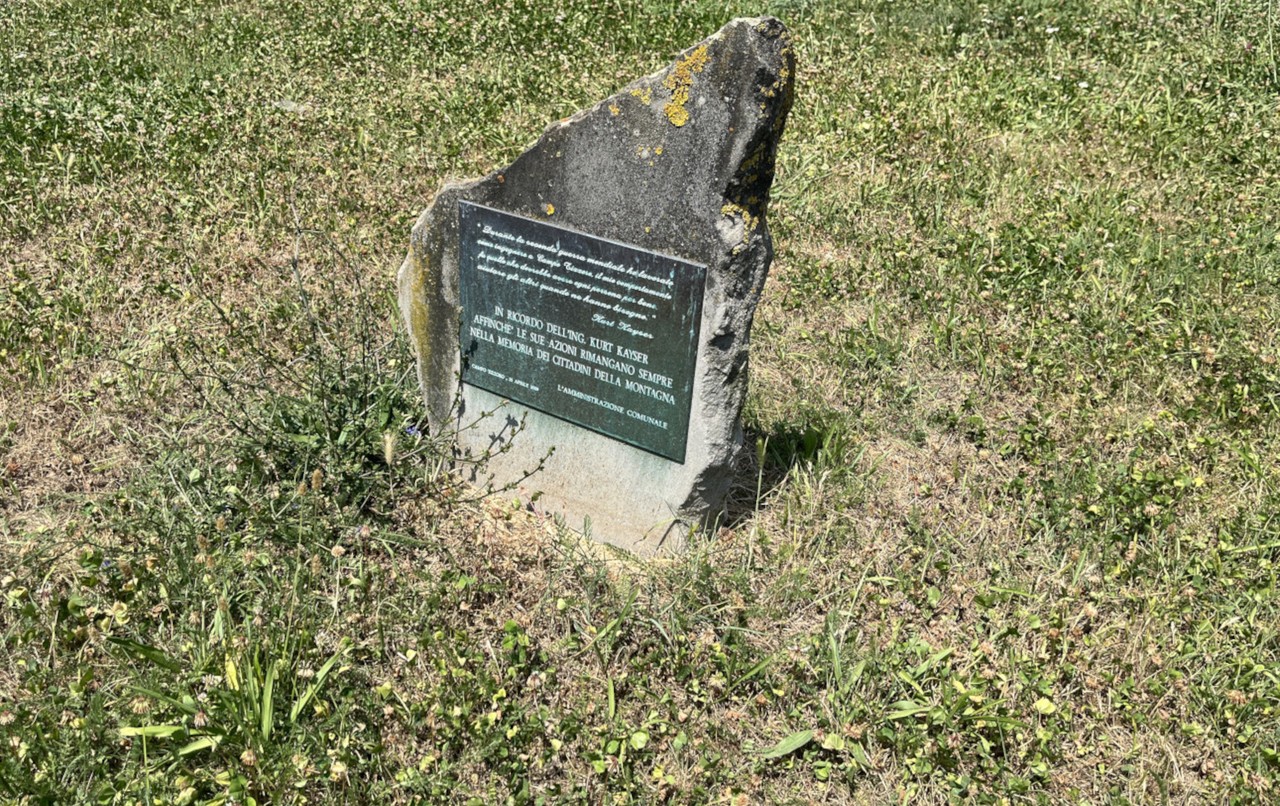
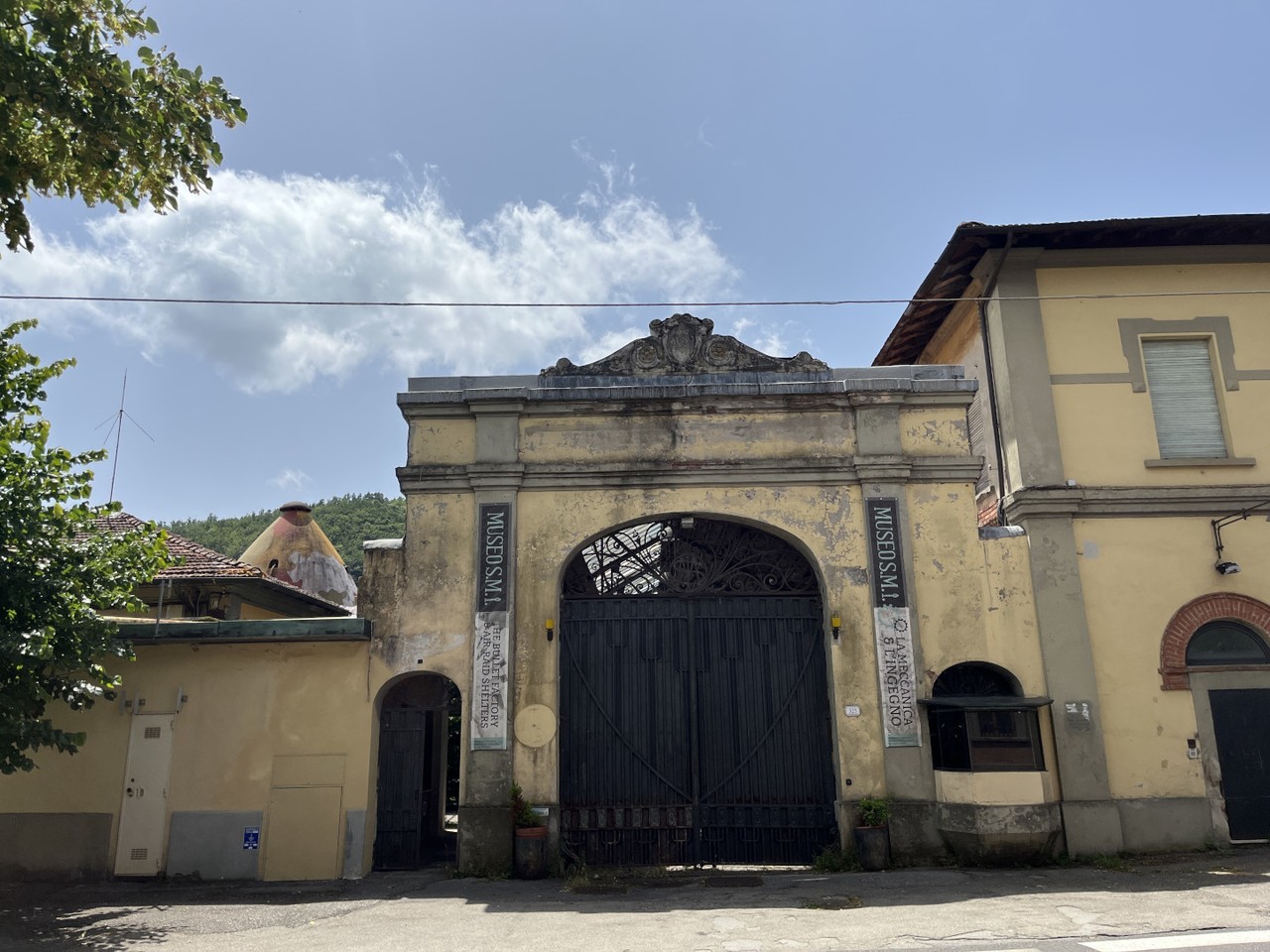
A detour west of Pontepetri leads along the Iron Trail (Sentiero del Ferro) to the industrial complex of Campo Tizzoro of the Società Metallurgica Italiana. This site played a crucial role during the Second World War, both for arms production and for its extensive system of tunnels and air-raid shelters, and it also became an important center of partisan activity. A decisive figure in this context was engineer Kurt Kayser, remembered for not obstructing resistance operations, preventing reprisals, and helping save the factory from destruction during the German retreat along the Gothic Line. A memorial stone dedicated to him stands near the factory.
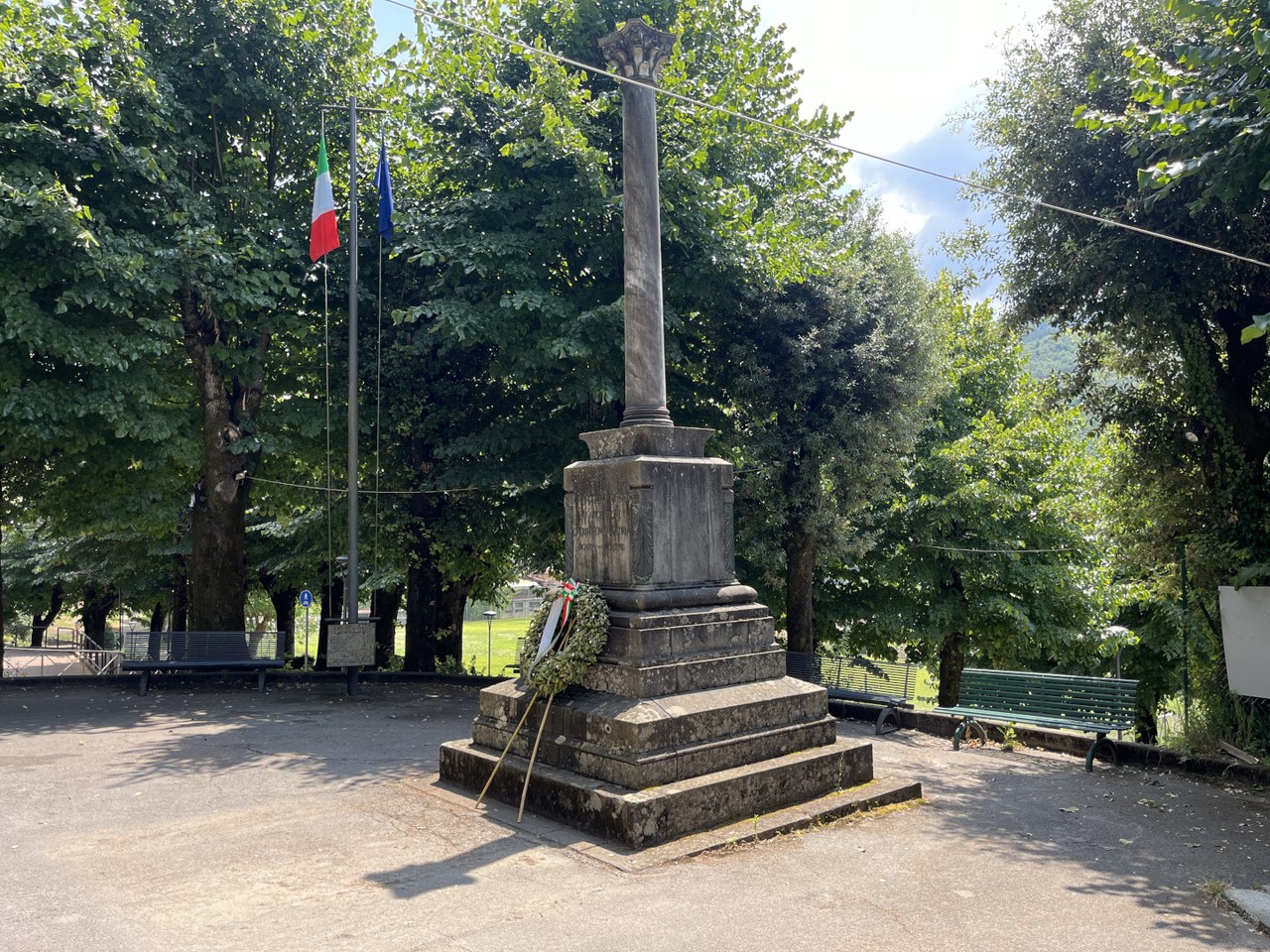
Continuing along the Iron Trail, the route reaches Maresca, a village known for its strong resistance against German occupation in 1944 and for enduring heavy bombings that caused casualties and destruction. Today, a monument honors all victims of Nazi and Fascist violence: a stone monolith with a brass plaque engraved with names and inscriptions, accompanied by a sculptural group by local artist and partisan Germano Pacelli.
Returning to the main route, from Pontepetri the trail follows the course of the Reno River into a deep and narrow valley until reaching the hamlet of Pracchia, an evocative Apennine village long connected to shepherding, agriculture, and — like much of the area — the production of ice and iron. It was here that the first trans-Apennine railway, the Bologna–Pistoia line, was built, and it is home to the historic Sabatini ironworks, founded in 1543. Today, the complex still preserves water-powered machinery and tools for visitors. Within the Ecomuseum of the Pistoia Mountains, the village also hosts the Ice Education Center, an engaging collection of audiovisual materials exploring this pre-industrial craft tradition.