A trail that unfolds along the banks of the Serchio River and the Lima River, among legendary bridges and healing waters, linking two towns of very different character, both marked by powerful memories and traces connected to the events of the Second World War.
The trail begins in Borgo a Mozzano, leaving behind the unmistakable silhouette of the Ponte della Maddalena — also known as the Devil’s Bridge — dating back to the period when the territory was controlled by Matilda of Canossa in the 11th century. After crossing the river and taking the trail toward Corsagna, the route climbs through the characteristic landscape of the Middle Serchio Valley: the river flowing broad and calm between wooded banks, the slopes gradually rising toward the peaks of the Apennines to the east, while the last outcrops of the Apuan Alps form rugged rocky profiles to the west. In the quieter bends of the river, it is sometimes possible to spot a grey heron or a kingfisher resting by the water.
After Corsagna, the route continues halfway up the hillside through oak and chestnut woods, with the option of following the variant known as the Cammino di Santa Giulia. The two paths run parallel and reconnect near Calcarta, shortly before reaching another famous bridge, built in this case to cross the Lima stream descending from the Pistoia Apennines. The Ponte delle Catene was the first suspension bridge in Italy constructed of iron and wood; its design was commissioned in 1840 by Charles Louis of Bourbon to the architect Lorenzo Nottolini.
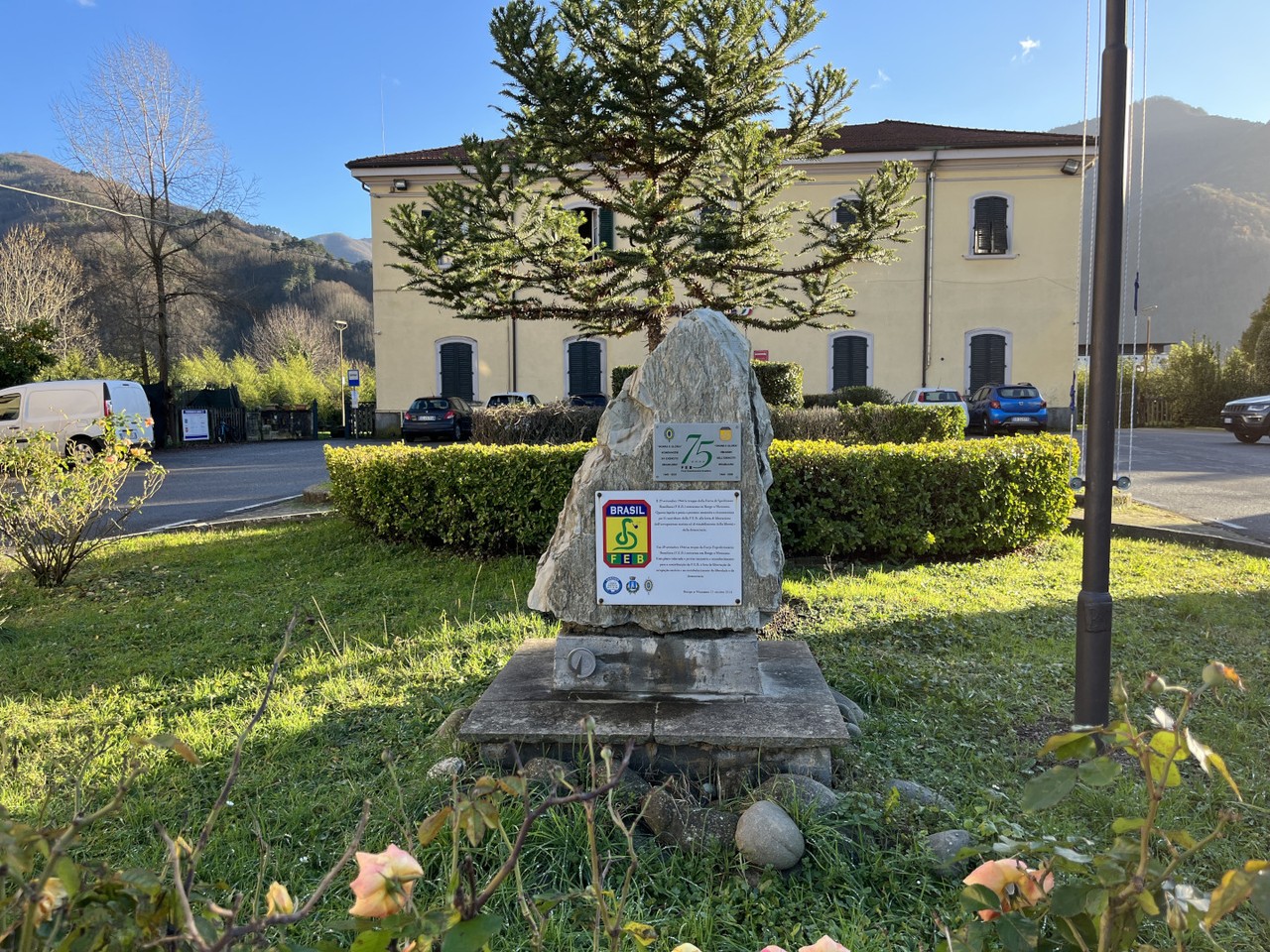
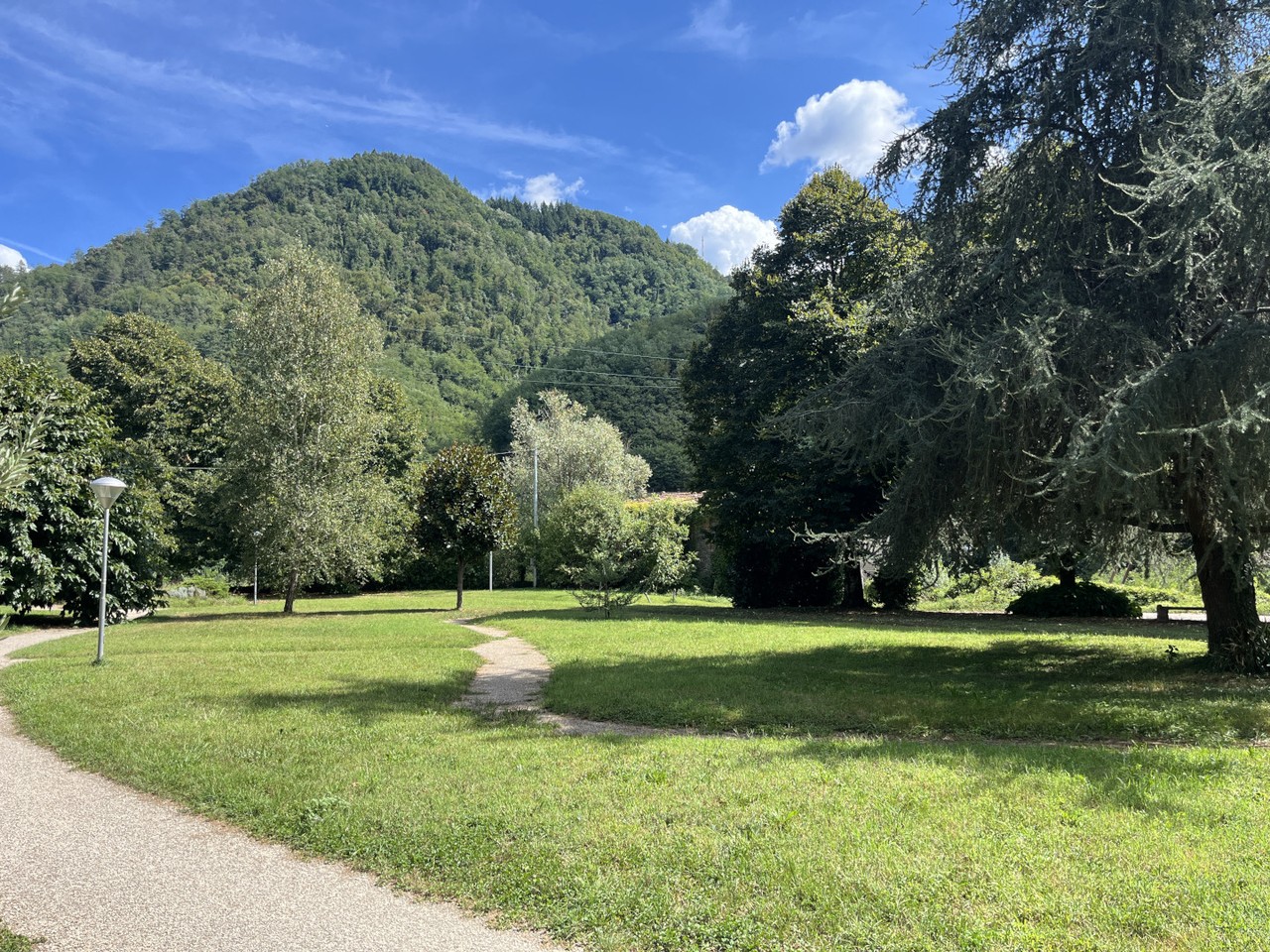
After crossing the bridge, the route reaches Fornoli, a riverside settlement located exactly where the Lima flows into the Serchio River. A stop is worthwhile at the Parco della Pace, a pleasant urban garden centered around a memorial plaque dedicated to Liliana Urbach, deported with her family from Bagni di Lucca to Auschwitz and murdered in the gas chamber upon arrival at only sixteen months of age.
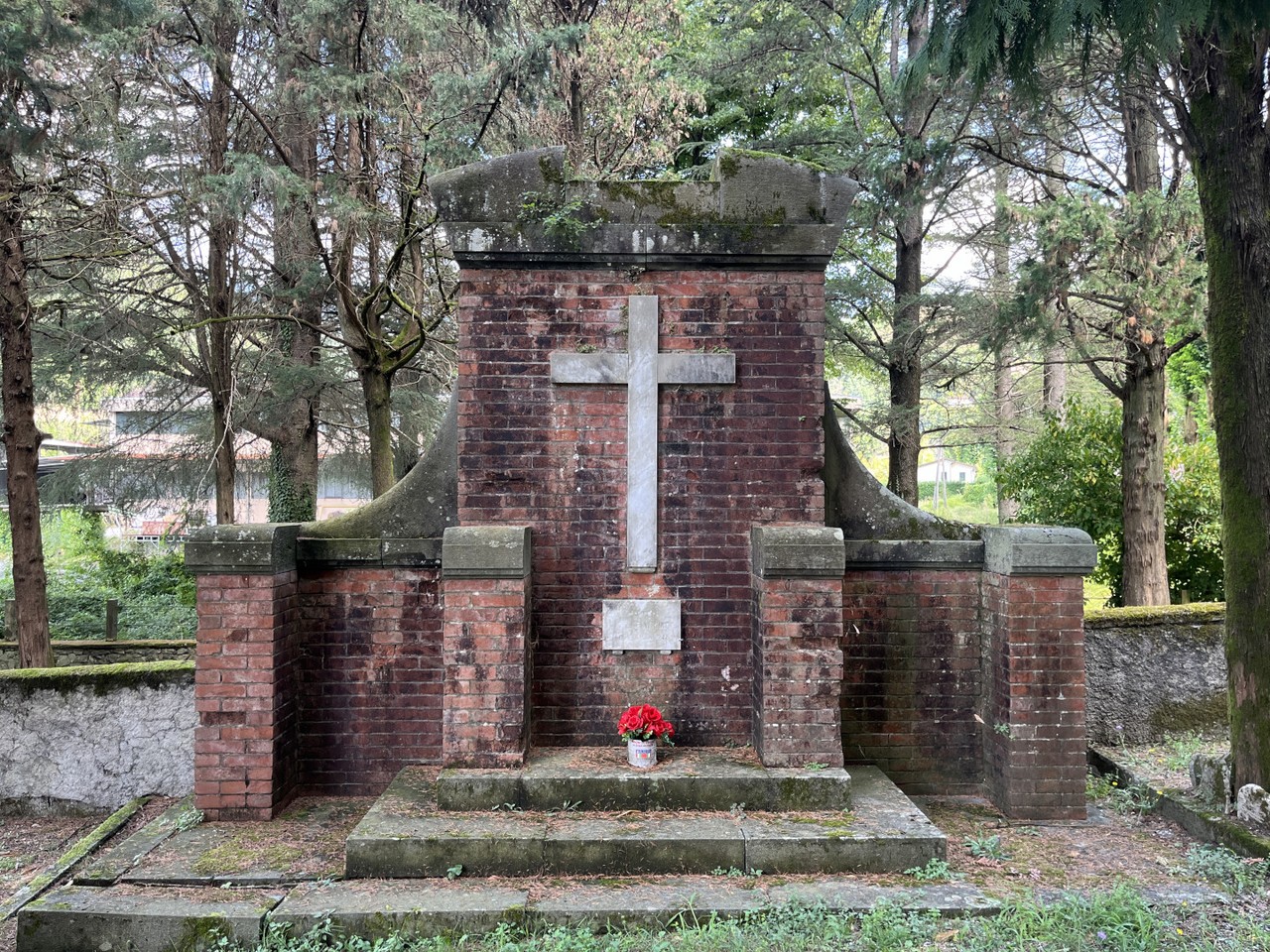
From Fornoli, the route follows the Via del Grano along the Lima stream before joining the Via dell’Acqua, which climbs toward Paretaio. Along the way, visitors encounter the elegant neoclassical architecture of the Cappella Demidoff and then the former Grand Hotel “Le Terme,” in the Bagni Caldi area, which was converted into an internment camp for Italian and foreign Jews between December 1943 and January 1944.
The trail finally reaches Bagni di Lucca, a destination full of charm thanks to its thermal baths, known since at least the time of the First Triumvirate in 56 BC and referred to in the Middle Ages as the “Baths of Corsena.” The town reached its height of splendor during the 19th century as a favorite retreat of the European aristocracy, and over time hosted writers and musicians such as Lord Byron, Percy Bysshe Shelley, Heinrich Heine, Alexandre Dumas, Franz Liszt, and Niccolò Paganini. Near the Anglican church stands a memorial plaque dedicated to Dante Pattini, a young boy killed by a rifle shot fired by a German soldier on June 12, 1944.