Among medieval villages and silent forests, this stage unfolds along ancient paths and panoramic landscapes beneath the lower Apuan Alps, revealing art installations set in unexpected places and traces of fortifications hidden among the vegetation.
The stage begins in Camaiore, a town whose name clearly derives from Latin — Campus Maior — already revealing its historical role as a crossroads and meeting place for peoples and cultures. When the ancient Roman settlement became a stop along the Via Francigena, the first nucleus of the town took shape, still testified today by the Abbey of Saint Peter, a splendid Benedictine abbey founded in the 8th century, with remains of its cloister and defensive walls still visible.
Walking along Via Roma, you reach Via di Rosi on the left, from where the route climbs toward the inland hills, where olive groves and vineyards gradually give way to holm oak and chestnut forests. The trail to follow is the C9 of the Traversata delle Frazioni Camaioresi (TFC), leading near the parish church of San Giovanni Battista and Santo Stefano, which still preserves traces of its original Romanesque style, before reaching Buchignano. Along the way, a short detour allows visitors to explore the ruins of Peralla Castle and the nearby restored village, renovated by the artist Maria Fiore De Henriquez. The journey then continues along the slopes of Monte Spranga, alternating between Mediterranean scrubland and woodland.
Soon afterward, the trail reaches Torcigliano, a settlement already inhabited by the year 984 and home during the Middle Ages to a hospital for travelers and pilgrims known as the “Ospitale delle Alpi Lucchesi.” The village preserves a timeless atmosphere, with stone houses clinging to the mountainside and connected by narrow alleys and stone stairways, among which large murals — especially depictions of animals created from 2020 onward — unexpectedly appear. Torcigliano was also the birthplace, in the 17th century, of the painter Giovanni Marracci and the renowned scholar and translator of the Quran Ludovico Marracci, both figures of European significance who grew up in this secluded village.
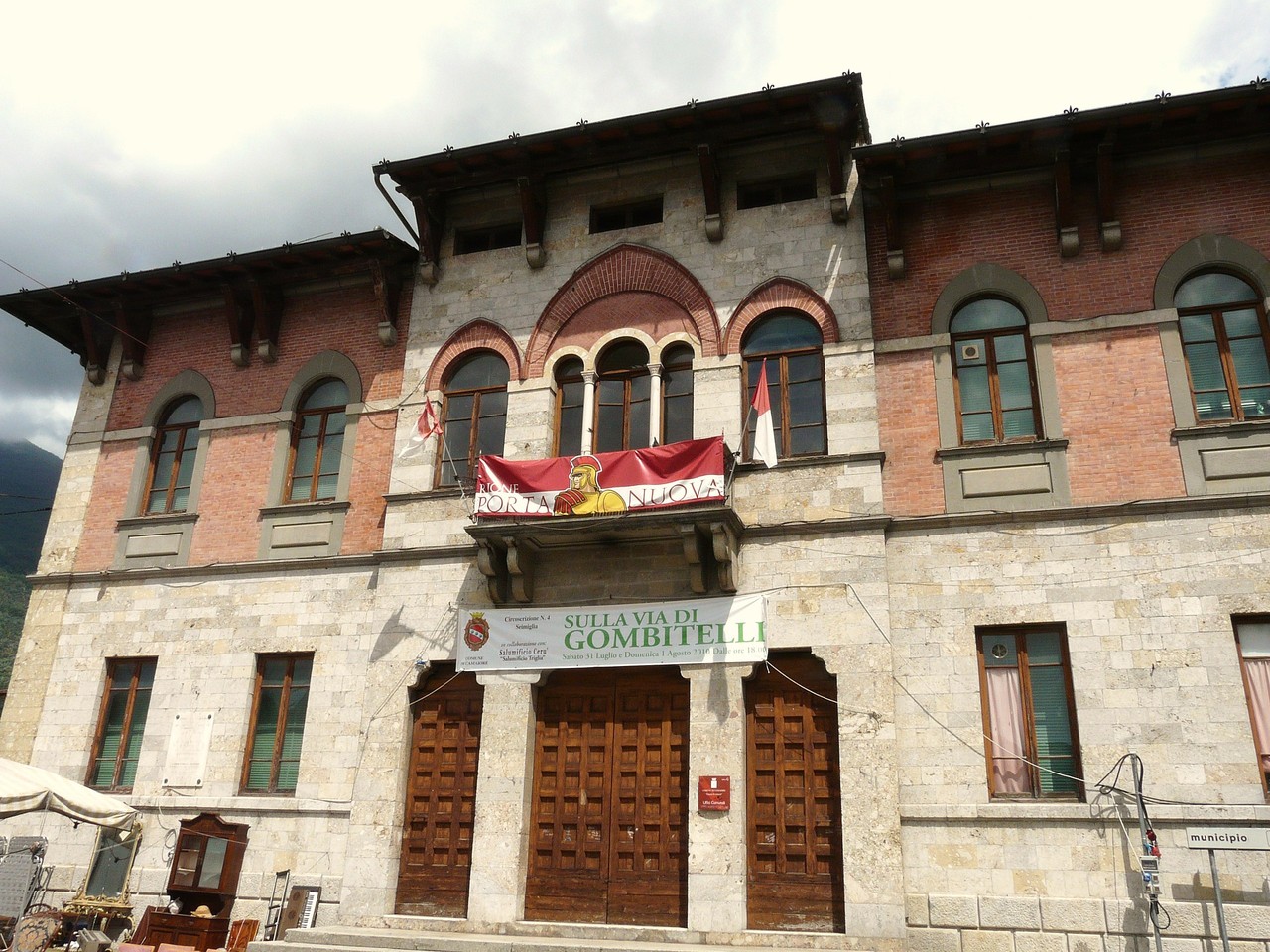
A mural of a wolf marks the way out of the village, passing beside the ancient church of San Michele Arcangelo and soon leaving the paved road behind for trail C13 (TFC), which through pleasant woodland leads to the “molinaccio,” the stone bridge over the Lucese stream. The route continues through the hamlet of Gombitelli and then along the Via del Lucese, a historic road once used to travel from the Versilia coast to the Garfagnana hinterland. The trail then turns toward Crospoli to connect with path C14.
The route descends toward Anticiana, a small medieval village nestled among wooded hills. From here the walk becomes more intimate, following shaded mule tracks through oak and chestnut forests where roe deer are often encountered, while buzzards circle high above the ridgelines. Along this section, the hilly landscape offers alternating views over the plain of Camaiore, the coastline, and the rolling profiles of the Apuan Alps.
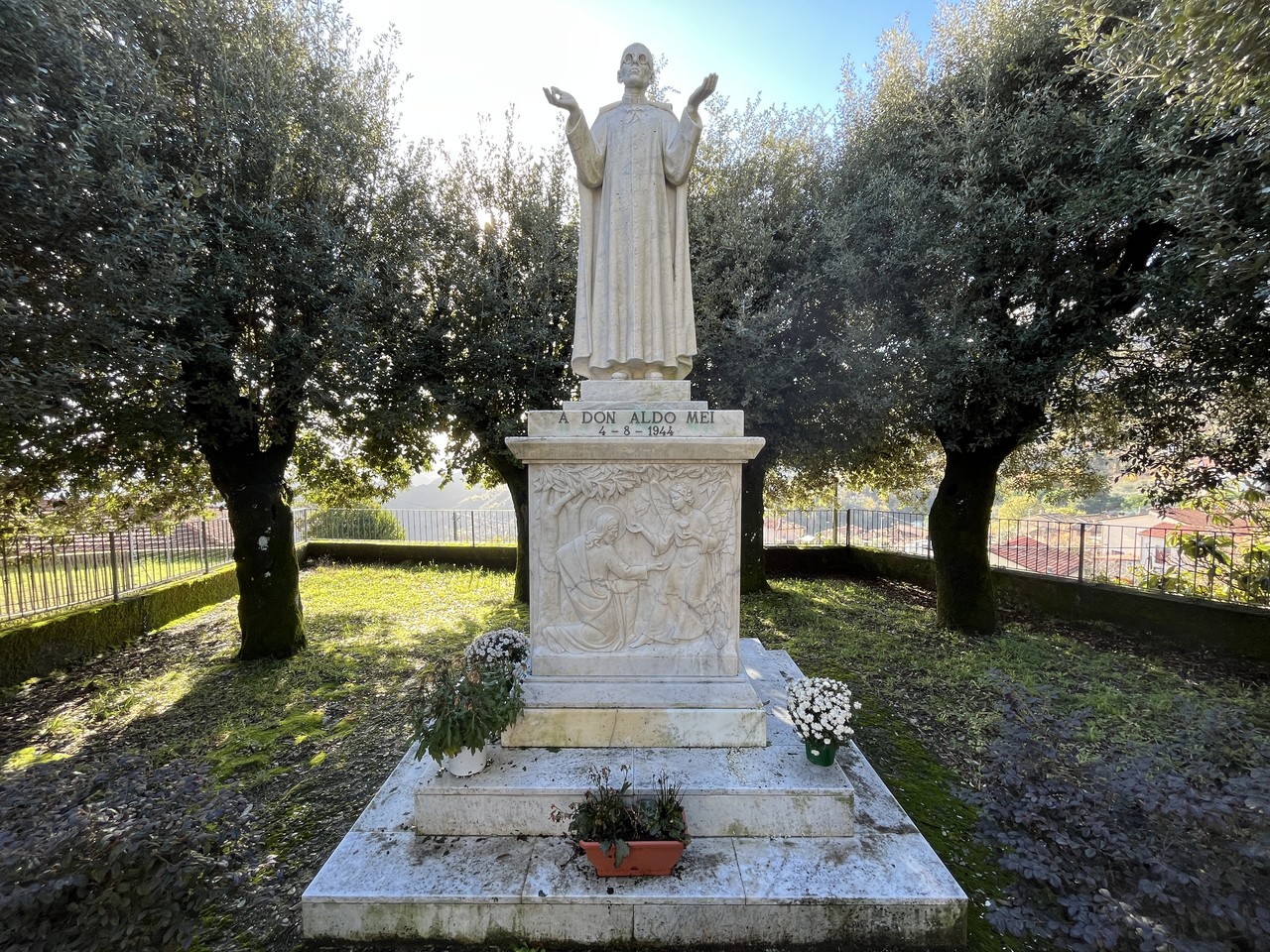
The final destination is Fiano, in the municipality of Pescaglia. The village overlooks a small, quiet valley where history layers itself in stone architecture, roadside shrines, and dry-stone walls dividing the fields. Here the memory of Don Aldo Mei is honored: a member of the Resistance in Lucca and parish priest of Fiano, he was arrested and executed on August 4, 1944, near Porta Elisa in Lucca. The Sentiero della Memoria e della Pace — the Trail of Memory and Peace — which climbs from the village toward Monte Acuto, is dedicated to him.