From the “Red Star” on the summit of Monte Sole Historical Park, the descent toward Marzabotto follows the “Postman’s Path,” recounting stories of everyday courage from people who chose dignity amid barbarism.
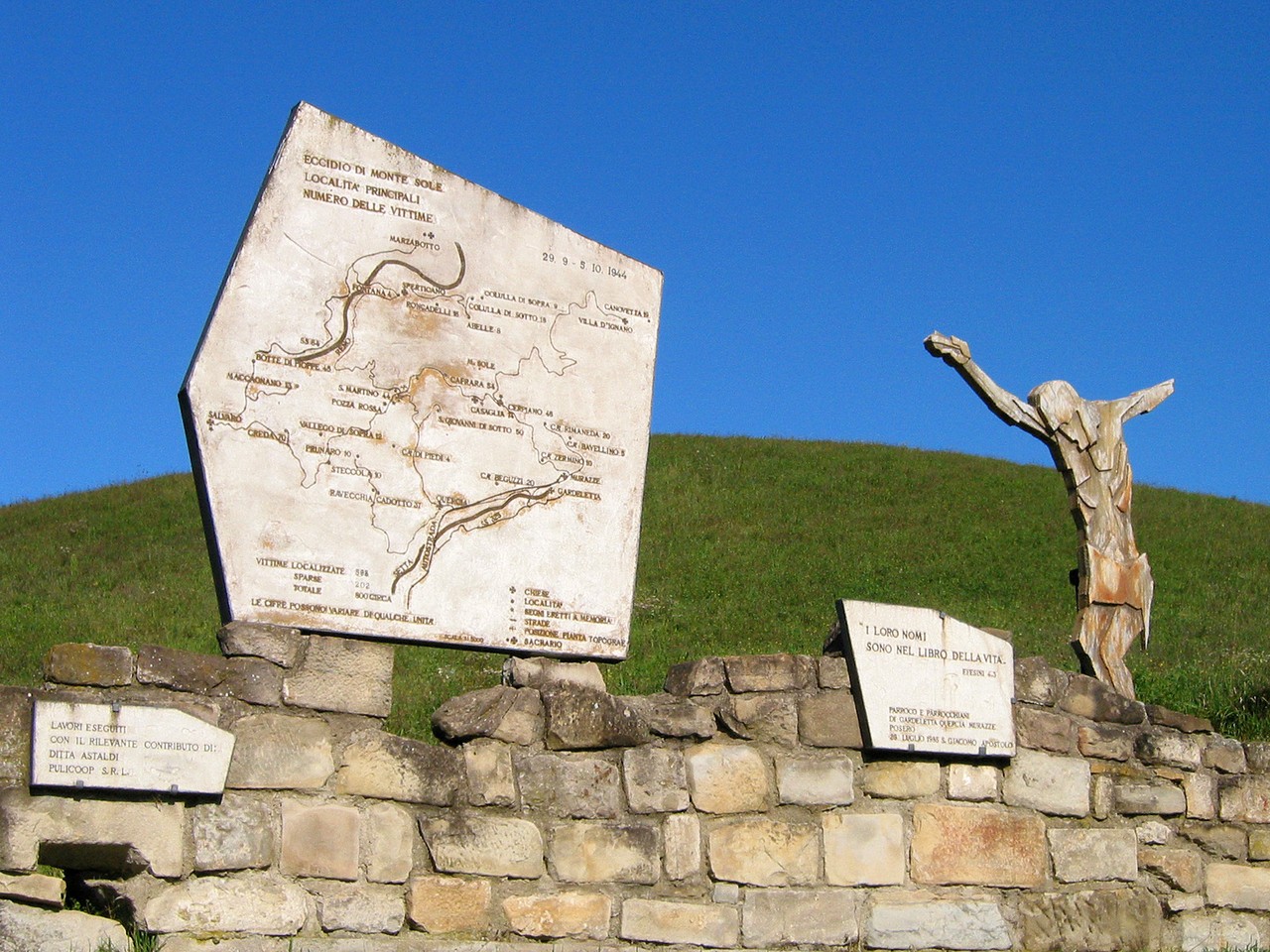
From the Peace School of Monte Sole the trail descends into the Reno valley, passing near Caprara di Sopra, one of the villages that, in its silence, still bears the traces of the tragic events it witnessed. The remains of houses and the church stand as testimony to the massacre carried out by Nazi soldiers on September 29, 1944, when many civilians — including women and children — were gathered and executed here.
The route continues on trail 132, better known as the “Postman’s Path.” This path is dedicated to Angelo Bertuzzi, the postman who from 1938 onward walked these roads and mountain tracks every day to deliver mail to scattered hamlets. A gentle man and a staunch opponent of violence, he was captured by Fascists who tried to force him to reveal the names and movements of local partisans, but he never spoke.
The trail descends through woods of oak and chestnut, with occasional open stretches offering views over the Reno valley and, in the distance, the plains of Bologna fading to the north. The first stop toward the valley floor is the village of Sperticano, where the remains of Don Giovanni Fornasini rest. He was awarded the Gold Medal for Military Valor. Close to the partisans, he defended the civilian population during the occupation, saving many lives until October 1944, when he was executed near San Martino di Caprara.
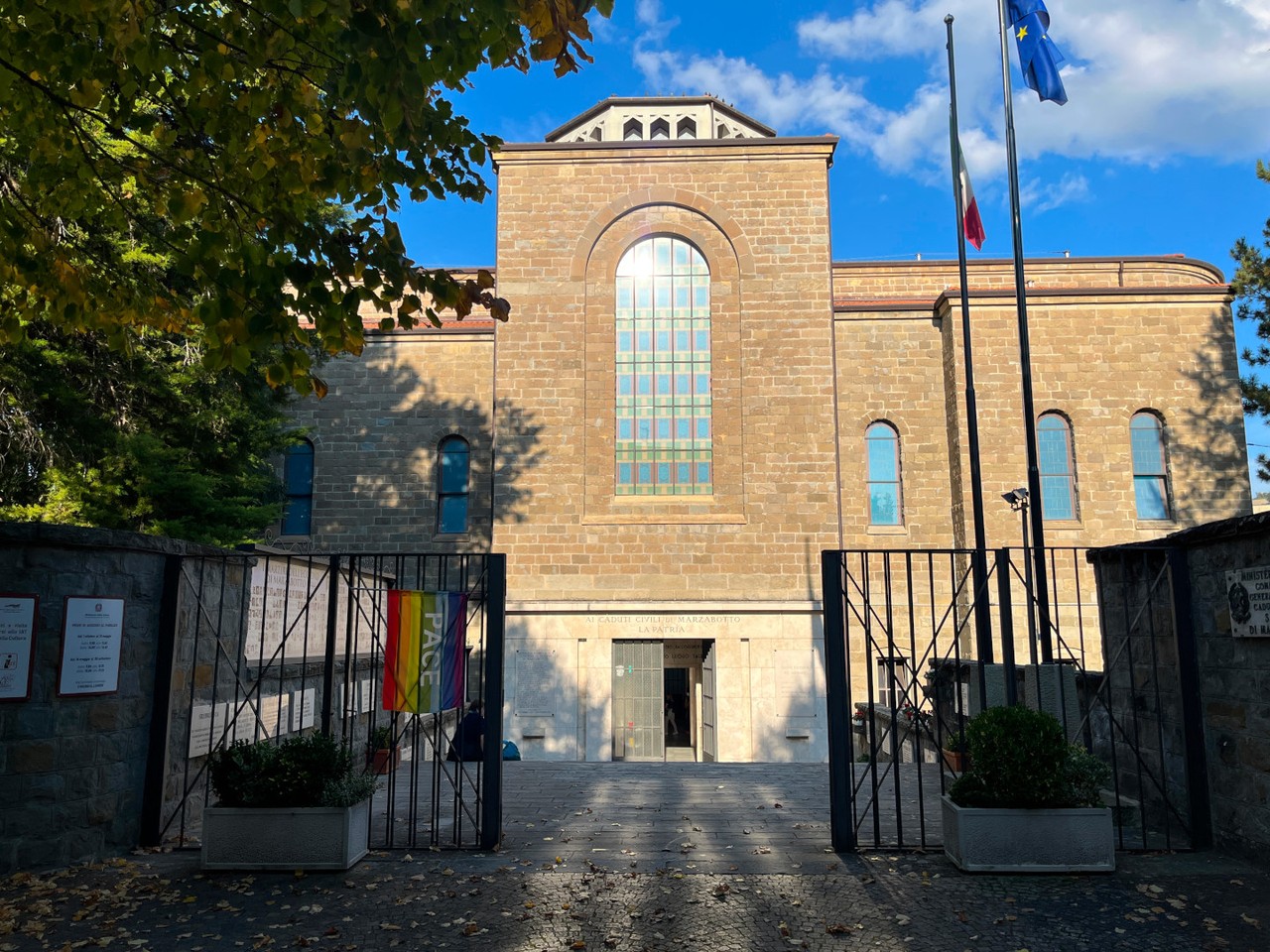
From Sperticano, the path continues its descent toward the valley floor, eventually running alongside the Reno River on a dirt road bordered by typical riparian vegetation with tall poplars. The final destination is Marzabotto, where olive trees dedicated to peace in the town center recall the historical debt this place carries toward the twentieth century. A visit to the Martyrs’ Shrine is essential, as it stands as a memorial to the massacres that took place at Monte Sole.