A trail that crosses the lands of the Etruscans, passing through small hamlets and religious sites, all equally wrapped in a quiet and evocative atmosphere. At a crossroads of pilgrimage routes and ancient roads, the memories of the battles of 1944 emerge, along with the many victims commemorated by monuments and plaques scattered across the hills. These are the same landscapes that inspired the painter Giorgio Morandi, who chose these hills as a place of deep artistic reflection. Una tappa che attraversa le terre degli Etruschi, attraversando piccoli abitati e siti religiosi tutti ugualmente avvolti da un silenzioso fascino. In un crocevia di cammini e antiche strade si raccolgono le memorie delle battaglie del ‘44 e delle tante vittime ricordate da monumenti e lapidi sparsi sulle colline che Giorgio Morandi scelse come luogo di ispirazione per la sua arte.
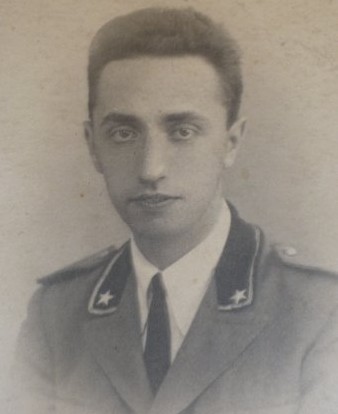
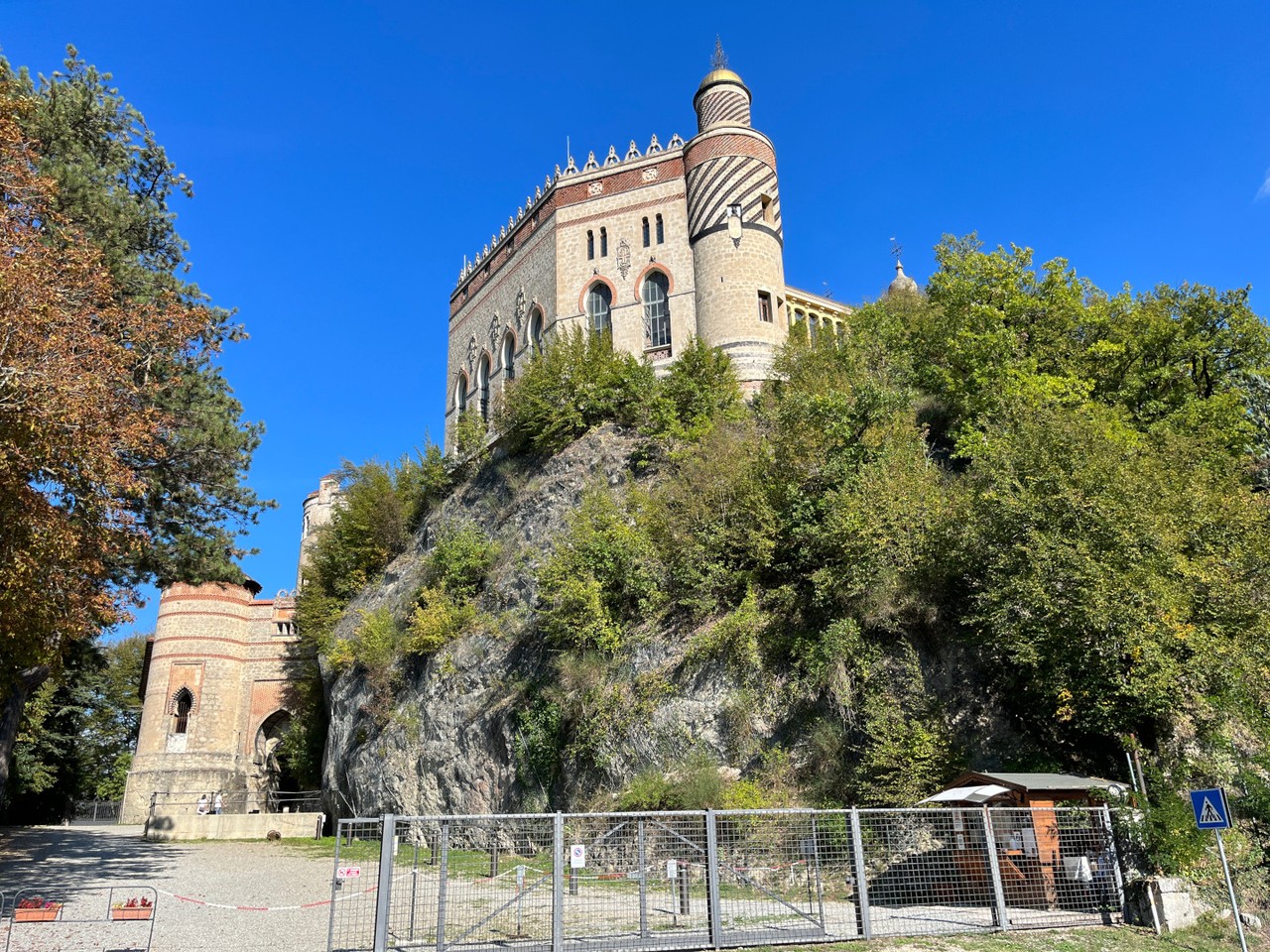
The route leaves Riola and the hamlet of Ponte, crossing the Limentra River just a few meters before its confluence with the Reno River. From several points along the path, the striking silhouette of Rocchetta Mattei remains visible — the eccentric castle that during the German occupation of Italy became the headquarters of a SS battalion. Near it, on November 9, 1944, the 18-year-old partisan Giovanni Rastelletti, known by the nom de guerre “Bobi,” was fatally struck by a German grenade fragment.
The trail climbs the hillside toward La Scola, a village that once stood on the border between the Lombard Kingdom and the Exarchate of Ravenna. Its name likely derives from skulk, meaning a lookout or watch post. Today it appears as a stone “salon village,” whose charm owes much to the Comacini Masters from Milan and Como, skilled builders who transformed ancient towers into civil dwellings. Among them stands a monumental cypress over seven hundred years old, still rising powerfully in one of the most evocative corners of the village.
The path continues along a route shared by several pilgrimage ways, including the Via Mater Dei and the Cammino dei Tesori del Reno, passing isolated houses, cultivated plots, and small points of interest such as the spring of Sterpina water in Predolo, traditionally considered magical. The silhouette of Monte Vigese and the Sanctuary of Montovolo overlook the route, which then descends to intersect CAI trail 100 and the Via della Lana e della Seta, suspended between the Reno River to the west and the Setta River to the east, across rolling ridges and clay gullies.
The journey reaches Monteacuto Ragazza, an area that preserves important traces of Etruscan civilization, including an open-air sanctuary. In a small 5th-century BC shrine, two bronze statuettes — a kouros and a kore — were discovered, now preserved in the Archaeological Civic Museum of Bologna, considered among the finest examples of Villanovan-period art. Walking through these woods still conveys the vivid sensation of being in a sacred landscape.
A gentle undulating stretch leads near Stanco di Sopra, where the Monument to South African soldiers is found, recalling the fierce battles between October 8 and 13, 1944, when Allied South African troops fought to wrest Monte Stanco from SS control.
The final destination is Grizzana Morandi, an Apennine village that carries in its very name the memory of its most celebrated resident, the painter Giorgio Morandi. Among silent and untouched hills, he found his ideal creative environment and returned every summer for over fifty years. His House Museum preserves the atmosphere of his last summer there in 1963, with frames, canvases, brushes, and a portable easel with his paint kit. Walking through Grizzana, it is easy to recognize the same diffuse light and soft rolling hills that Morandi translated into his paintings.